
In this article
A weird visual might stop someone for a moment, but if it has nothing to do with your offer, the attention disappears just as quickly. That’s because an effective ad hook connects attention to relevance.
That connection is especially important in paid social, where creative has to work fast. The first few seconds of an ad can have an outsized impact on performance, which is why marketers spend so much time testing different opening angles and creative concepts.
But there is no single formula for a great hook. Depending on the context, you might want your ad to create curiosity, challenge conventional wisdom, or tap into another kind of motivation. Before you decide what your ad should say, it helps to decide what psychological angle to lead your creative with.
Heads up: Knowing the psychology of a hook doesn't matter if your team doesn’t have the bandwidth to create and test different ad hooks. If you need a partner to build, test, and optimize high-converting creative, book a discovery call with Primer.
What is an ad hook?
An ad hook is the opening element of an advertisement designed to earn attention and encourage further engagement. That definition is intentionally broad because hooks can take many forms.
In a video ad, the hook might be the first sentence a creator says on camera. In a static ad, it could be a headline. In a UGC ad, it might be a confession, a complaint, a surprising result, or a product demonstration. Marketers have developed countless variations of these approaches, particularly in short-form video where the opening moments carry a lot of weight.
Hooks are not limited to copy. In fact, some of the most effective hooks are visual. An unusual product demonstration, a dramatic before-and-after image, or a visual that stands out among everything else in the feed can stop someone just as effectively as a line of dialogue.
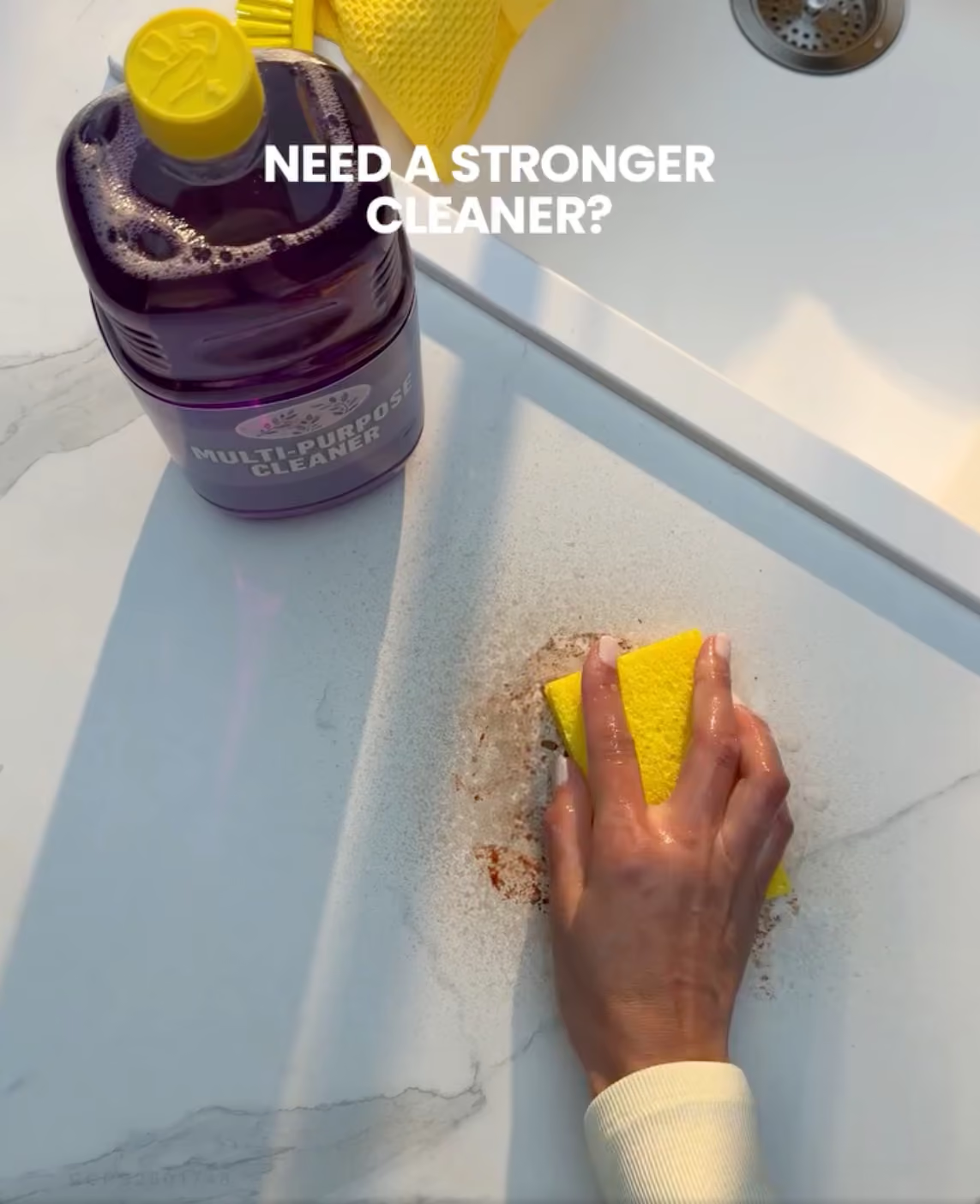
For example, this 6-second video ad from Pine-Sol shows a stubborn kitchen stain being wiped away. Viewers can understand the product benefit before they've read a single word of copy.
The job the hook is doing matters more than the format. Before deciding exactly what your ad should say, it helps to think about what psychological response you want to create.
What makes an ad hook effective?
Effective hooks usually do at least one of four things:
- They signal relevance. The viewer immediately understands why the ad might apply to them.
- They create tension. The ad introduces a question, contradiction, problem, or open loop the viewer wants resolved.
- They promise value. The viewer expects to learn something useful, see a result, or avoid a mistake.
- They feel different. The ad doesn’t blend into the surrounding feed.
Weak hooks tend to fail for the opposite reasons. They may be too broad, too polished, too vague, or too disconnected from the rest of the ad.
“You need this product” is not a hook. “This is the only thing that got my toddler to sleep past 6 a.m.” has a fighting chance because it is specific, emotionally loaded, and relevant to a defined audience.
To craft a great hook, you have to understand the psychological angle behind them. Below are seven types of ad hooks to use when developing paid social creative.
1. Audience identification hooks
Audience identification hooks work because people pay attention when they recognize themselves. These hooks call out a specific group, role, life stage, identity, or situation.
A generic meal delivery ad might say: “Dinner just got easier.”
An audience identification hook would say: “Busy parents who are tired of cooking every night, this is for you.”
That second version does more work. It tells the viewer who the ad is for and names the situation they are in.
This type of hook is especially useful for top-of-funnel campaigns because it helps the right people self-select quickly. It can also give the algorithm clearer creative signals about who is responding to the ad.
Audience identification hooks don't always rely on demographics. Sometimes, they work by addressing a specific experience or community. For example, this Hungryroot partner ad starts with the line, "Here is a neurodivergent accommodation you might not have thought of: making food as easy as possible."
Source: @trevorcarroll/Instagram
Within a few words, the ad signals exactly who the message is for. Viewers who identify with that experience understand the ad may be relevant to them, while everyone else understands who the intended audience is. This clarity helps the right people pay attention to the message.
2. Problem-aware hooks
Problem-aware hooks lead with pain. They work because people are naturally alert to problems they already experience. You’re naming something they have felt before, as opposed to trying to convince them that a problem exists.
This CeraVe partner ad opens with the line, “I’m a derm PA and this is why most people give up on a mineral sunscreen.” The caption supports this further: “Most people don't hate sunscreen—they hate how it feels.”
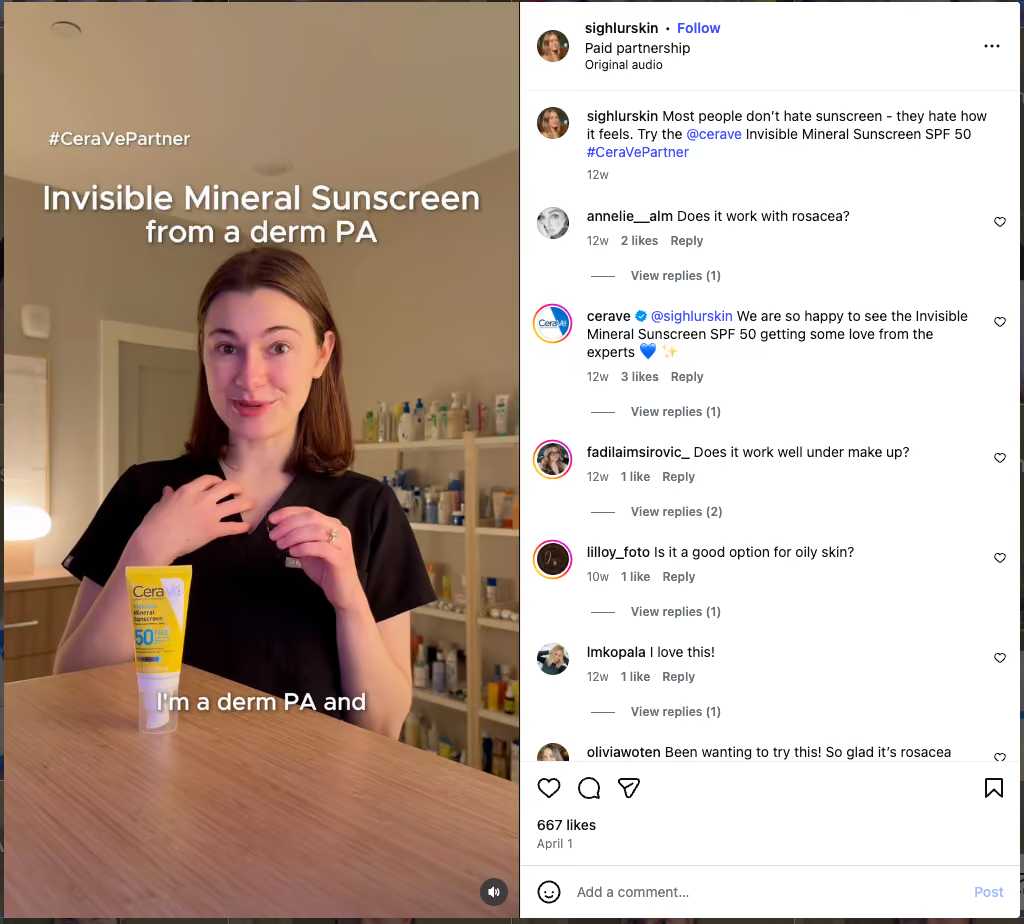
The hook works because it starts with a problem the audience already recognizes. Rather than trying to persuade viewers they need sunscreen, the ad addresses the friction that prevents them from using it, making the solution more compelling when it's introduced.
Problem-aware hooks are strongest when the product can quickly show relief. If an ad names a problem and then drifts into vague brand messaging, the hook feels wasted.
3. Curiosity hooks
Curiosity hooks create an information gap. They work by giving viewers just enough information to become interested—but not enough to satisfy that interest. The audience keeps watching because they want to know the missing information.
This Taos Footwear partner ad starts with the statement, "I almost talked myself out of these. I'm so glad I didn't."
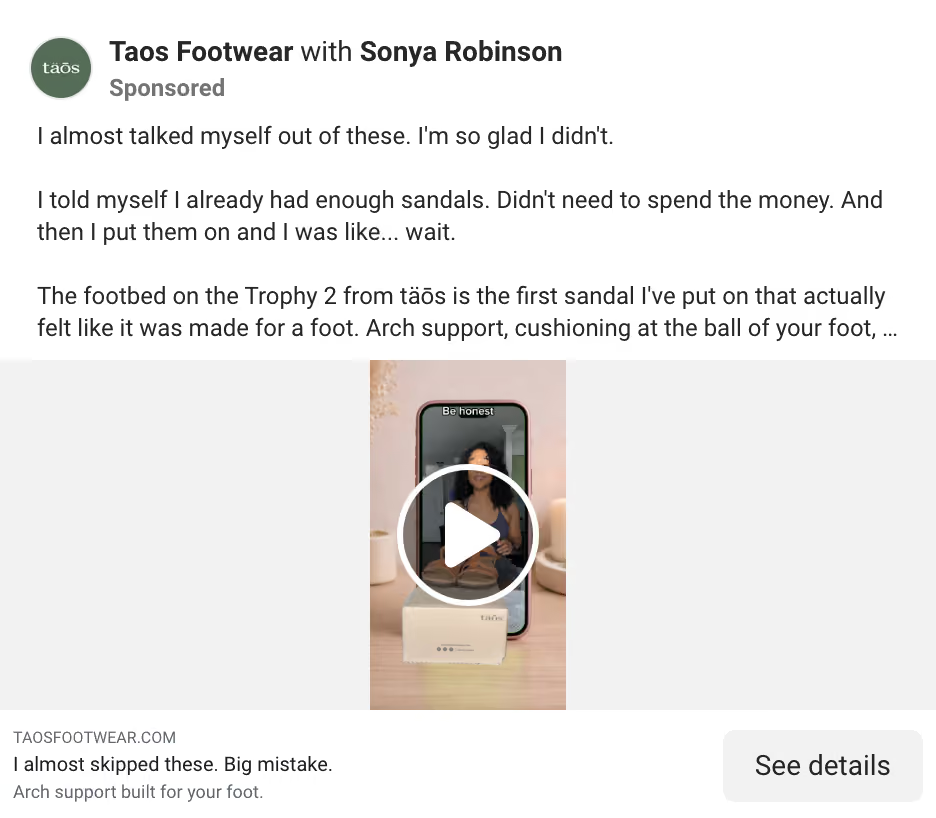
The statement raises several questions at once: What almost stopped her from buying the sandals? What changed her mind? Why was the purchase worth it?
The ad doesn't answer those questions immediately, encouraging viewers to stay engaged until they get the full picture.
Curiosity hooks are most effective when the reveal delivers on the promise of the opening. If the answer is disappointing or unrelated to the product, viewers may feel misled.
4. Contrarian hooks
Contrarian hooks create tension by going against what the audience expects. As an example, this Eight Sleep partner ad begins with the statement, "I cannot sleep with my husband anymore."
Source: @britanynwilliams/Instagram
The line grabs attention because most viewers assume the ad is about a relationship issue. But the conversation turns to sleep quality and temperature regulation. That gap between expectation and reality encourages viewers to keep watching long enough to understand what's really being discussed.
Contrarian hooks are most effective when the unexpected claim connects naturally to the product. If the opening statement feels disconnected from the rest of the ad, the attention it generates probably won’t translate into engagement—it may just annoy readers and feel like clickbait.
5. Transformation hooks
Transformation hooks focus on change. They show the audience what life could look like after using a product, service, or solution. Instead of emphasizing features, they emphasize outcomes.
This Function partner ad opens with the line, "Two years ago, I decided to change my life through my fitness journey and I lost over 45 pounds."
Source: @digitaldiner0/Instagram
The hook establishes a before-and-after narrative. Viewers learn where the creator started and what they achieved, creating a clear picture of the transformation. The outcome becomes the reason to keep watching and learn more about the habits, tools, and decisions that contributed to that change.
Transformation hooks work best when the result feels specific and believable. Concrete outcomes are easier for audiences to understand—and easier to imagine for themselves.
6. Social proof hooks
Social proof hooks reduce perceived risk.
When people are unsure what to buy, they look for evidence that others have already taken the leap. That evidence might come from customer counts, reviews, expert endorsements, press mentions, waitlists, ratings, or recognizable users.
Parents tend to be skeptical of educational apps, especially when they're being asked to introduce another screen into their child's routine. This Khan Academy Kids ad addresses that hesitation with the line, "The only app millions of parents trust for solo screen time."
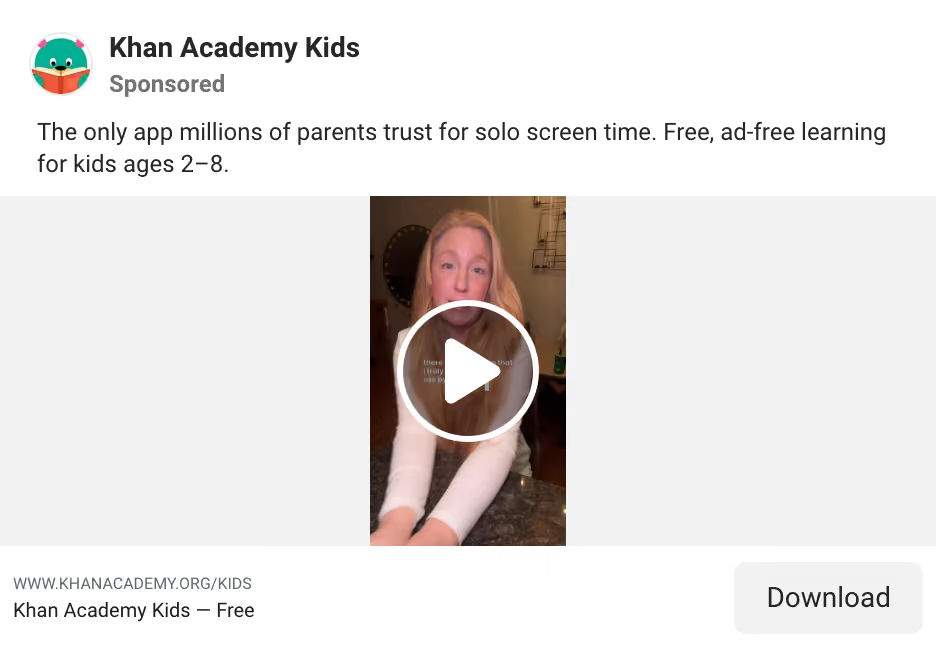
Before the ad says anything about lessons, activities, or learning outcomes, it answers a more fundamental question: What do other parents think? By leading with trust and scale, the ad reduces uncertainty and makes the product feel like a safer choice.
Social proof hooks work best when the audience is already interested in a solution but needs reassurance before taking action.
7. Story hooks
Story hooks invite the viewer into a narrative. They work because people are wired to follow situations, conflict, and change. This hook doesn’t have to be dramatic, but it should create momentum.
In UGC, story hooks are common because they mirror how people naturally share recommendations. For instance, this Lovevery partner ad opens with the text, "Adjusting to newborn life again, a decade later, and exploring our new favorite toy."
Source: @kelliegerardi/Instagram
The hook doesn't depend on a bold claim or a product benefit. It works because it introduces a situation people want to learn more about. The audience is dropped into a real moment in someone's life and encouraged to follow along. That sense of narrative momentum helps carry viewers into the rest of the ad.
The risk is taking too long to get to the point. A story hook should open the door, not become a rambling setup.
Great ads can combine multiple hook types: 3 examples
These categories are useful for planning and testing, but a lot of real ads don’t fit neatly into one bucket. Here are three examples of how brands combine hook types within a single creative concept.
Dollar Shave Club
Dollar Shave Club’s launch video is a classic example.
The line, “Our blades are f***ing great,” works as a contrarian hook because it rejects the polished language people expected from razor brands at the time. But the ad also works as a founder story, a comedy sketch, and a product explainer.
Liquid Death
Liquid Death uses a different kind of hook. The brand’s “Murder Your Thirst” positioning makes canned water look and sound like something from a punk or heavy metal brand.
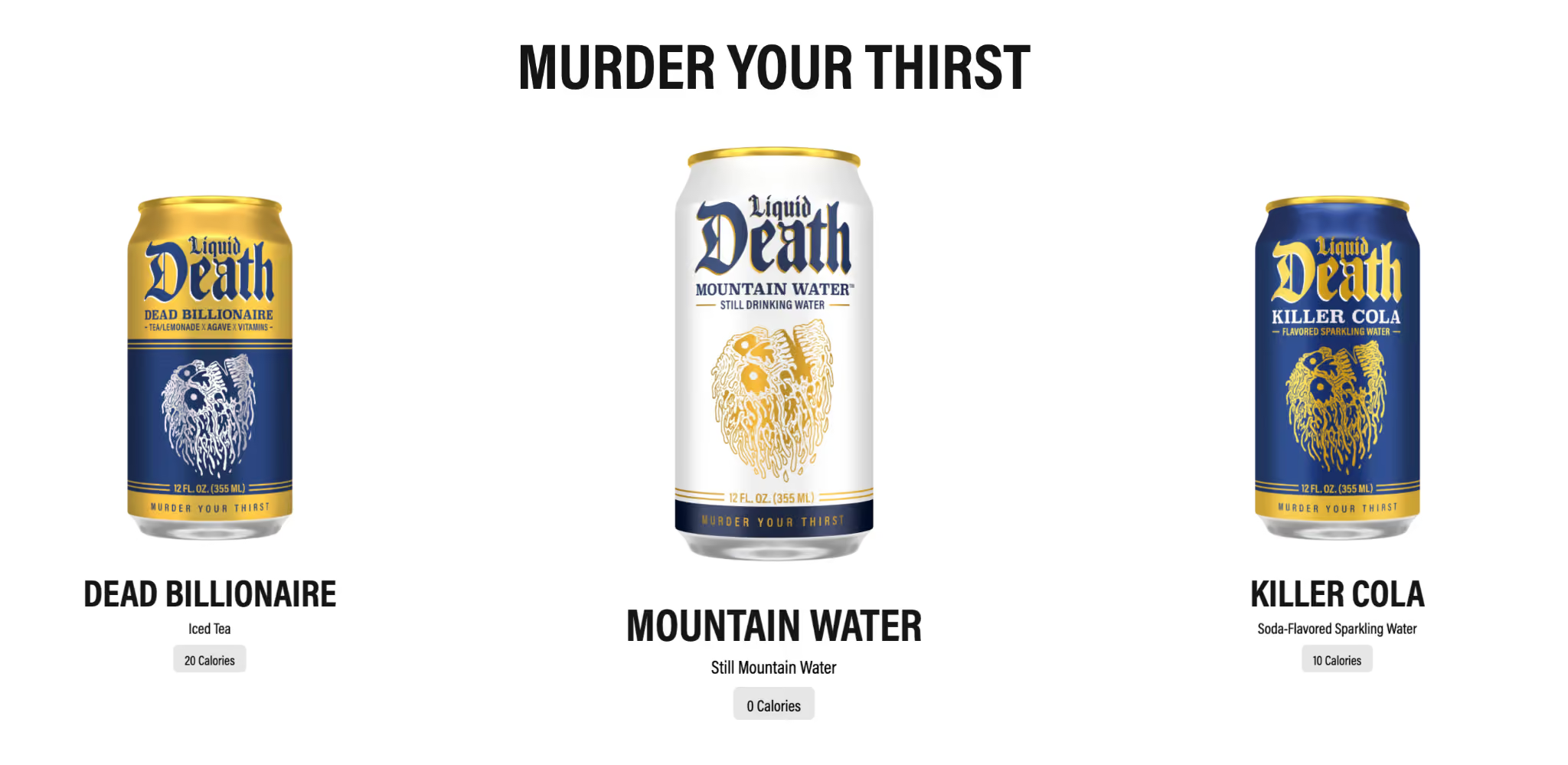
That creates curiosity before the product is even explained. Why does this water look like an energy drink? Why is the tone so aggressive for such a basic category? The hook comes from the mismatch.
Airbnb
Airbnb’s “Made Possible by Hosts” campaign leaned into story. The campaign used real trip photos to show the experiences hosts helped create.
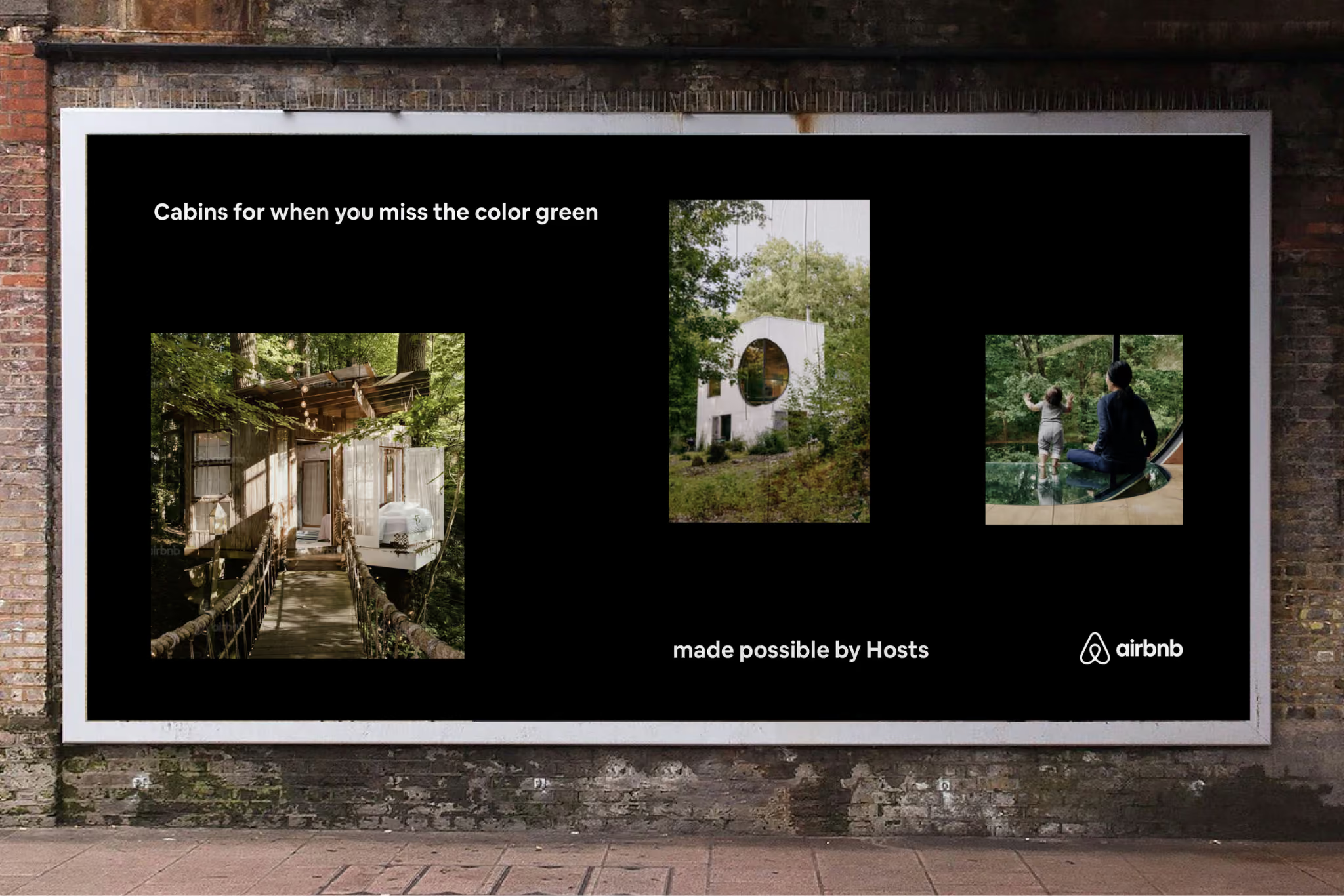
Instead of leading with a transactional message about booking a place to stay, the creative led with nostalgia and human connection.

These three examples are different, but they share one thing: the hook is tied to the creative concept. It is not simply a clever sentence pasted onto the front of an otherwise ordinary ad.
Using hook angles in creative testing
Once you understand hook types, you can use them to test what motivates your audience. A common mistake is testing small copy changes too early. For example:
- “Tired of cooking every night?”
- “Sick of cooking every night?”
- “Don’t want to cook tonight?”
Those are different lines, but they're essentially variations of the same hook. They all lead with the same problem-aware angle. A stronger test would compare different psychological angles for the same offer:
- Audience identification: “Busy parents who are tired of cooking every night, this is for you.”
- Problem-aware: “Tired of deciding what’s for dinner every night?”
- Curiosity: “The grocery store habit costing families more than they realize.”
- Transformation: “How one family cut weeknight cooking time in half.”
- Social proof: “More than 500,000 families have tried our meal kits.”
That kind of test tells you what motivates your audience: Do they respond to pain? Proof? Curiosity? A clear outcome? A direct audience callout?
Many of the same principles apply to creative testing, where comparing distinct creative hypotheses produces more useful insights than testing minor copy variations. Hooks fit naturally into that process because they are one of the clearest variables to isolate at the concept level.
Once you find a hook angle that works, you can keep iterating. Test new creators, openings, visuals, CTAs, offers, and landing page experiences. A winning hook is a signal you can build on.
Turn hooks into a creative strategy advantage
Engaging ad hooks help the right people recognize that your message is relevant to them. As you test different hook angles, you learn what resonates with your audience—and can use those insights to develop more effective creative.
If you're looking to improve creative performance through smarter testing, more compelling hooks, and higher-converting pages, contact us to learn how we can help.
.avif)
.avif)
.avif)
.avif)
.avif)
.avif)
.avif)


%2C%20Color%3DNegative.svg)
.svg)