In this article
What We Learned From Spending on ChatGPT Ads
OpenAI opened self-serve advertising on ChatGPT on July 22nd, giving advertisers a new channel to run click-optimized campaigns in the US. On August 11th, they shipped a fast follow: more granular targeting, conversion-optimized campaigns, and a handful of UX improvements to the platform.
Day 1 on a new channel is exactly the kind of opportunity we love to get our hands dirty with. We ran campaigns for our own brand across both objectives, tested creative variations, and spent enough to form opinions backed by data and experience. Here's what we found, and what we'd tell any brand considering testing ChatGPT ads for themselves.
Curious if ChatGPT ads are a good fit for your brand? Primer helps businesses test and scale campaigns on this new channel. Learn more about our ChatGPT ads services.
What it takes to launch a campaign
If you've built campaigns on Meta or Google, the bones of a ChatGPT ads campaign will feel familiar, but the levers are different, and far more limited at the time of this blog post.
- Objective. You're choosing between clicks, for traffic and awareness plays, or conversions, powered by ChatGPT's Conversion tool.
- Location targeting. This started out country-wide only. It's since expanded to state, city, postal code, and DMA-level targeting, with the option to exclude locations too.
- Custom audiences. Right now, the only audience option is direct list upload, usable for both inclusions and exclusions. If you're used to lookalikes, pixel-based retargeting, or interest targeting, this will feel bare-bones, though this will likely be an area OpenAI will improve in the future.
- Context hints. This is the real foundation of how ad groups get segmented on the platform today. Context hints guide which conversations your ads can show up in. Emphasis on guide: this isn't exact-match targeting, and there's currently no way to see how closely your ads are actually matching the hints you set.
- Images. Simple 1x1 thumbnails. In our testing, simpler creative without any text overlay consistently outperformed. Don’t expect your top performing Meta creative to translate over as-is. Build for this placement specifically.
What we learned running real campaigns
We tested both click and conversion objectives, watched performance closely, and came away with three takeaways worth sharing.
1. CPMs run higher than Meta, and bidding is still finding its footing
In our testing, CPMs landed slightly above what we're used to seeing on Meta, which is generally in the $20–$30 range. Compared to a traffic/awareness-oriented platform like TikTok, these placement costs are much higher, but not as bad for conversion optimizations.
Early on, ChatGPT ads required the max CPC to be set manually, and we found the most traction bidding around $3. OpenAI has since introduced a "Maximize Results" option, moving the platform closer to the automated bidding most advertisers are used to from Meta, Google, and TikTok.
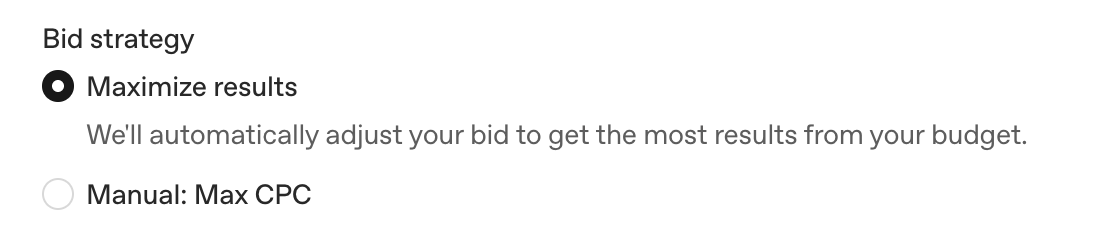
We expect efficiency to keep improving as that automation matures.
2. Don't let truncation warnings talk you out of longer copy
The platform flags headlines over 24 characters and descriptions over 49 characters as at risk of truncation in some placements.

It's a reasonable warning to take seriously, but in our testing, it undersold what longer copy could do.
We ran both short, truncation-safe copy and longer copy that risked getting cut off, right at the character limit of what the platform allows, and the longer copy significantly outperformed, driving a meaningfully higher CTR.
Our advice: test it in your own account rather than assuming a warning label is a hard rule.
3. The fatal flaw right now is analytics
This is the big one, and it's the reason we'd stop short of recommending ChatGPT ads to every brand. There's currently no visibility into what types of conversations your ads are appearing in, and no deeper reporting on the audience you're actually reaching. That makes it genuinely difficult to iterate. You can see performance, but not why performance looks the way it does.
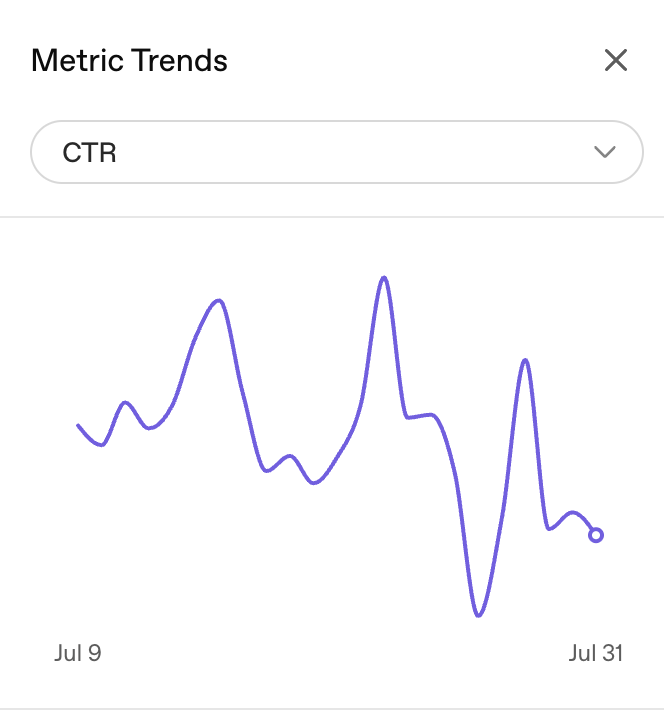
For now, that makes ChatGPT ads best suited to awareness plays or products with a broad enough audience that they don't need niche targeting to work. If you're selling into a narrow ICP and need to know exactly who's converting and why, you'll feel this gap quickly.
That said, this is a brand new platform only a few updates into its life. As OpenAI builds out analytics, we expect the case for ChatGPT ads to open up to a much wider range of businesses, and we'll be testing every update as it lands.
Should you test ChatGPT ads?
If you have the budget to experiment and a broad enough audience, yes, get in now while the channel is new and competition is still relatively light. If you're dependent on precise targeting and granular reporting to hit efficiency goals, it's worth watching for now rather than betting real budget on it.
Either way, treat it like any new channel: start small, test your own creative and copy assumptions rather than importing what works elsewhere, and build in review checkpoints as OpenAI continues to ship updates.
Want a second set of eyes on whether ChatGPT ads make sense for your brand, or help building creative that's actually built for this placement? Talk to Primer—testing new channels the right way is exactly what we do.
.avif)
.avif)
.avif)
.avif)
.avif)
.avif)
.avif)


%2C%20Color%3DNegative.svg)
.svg)