In this article
In January 2026, OpenAI announced that it would begin testing ads in ChatGPT. Weeks later, its pilot ad program launched for U.S. users on ChatGPT’s Free and Go plans. For marketers, this development is an early look at what advertising inside an conversational interface will look like, whether it’s from OpenAI or another AI company.
Below, we’ll cover what OpenAI has shared publicly so far, what makes ChatGPT ads different from traditional social and search ads, and which businesses have strong potential for success on this new ad channel.
Want a clear testing plan for ChatGPT ads? Primer can help you design an experiment and evaluate results. Reach out to find out how we can support your team.
ChatGPT ads timeline: How OpenAI ventured into the advertising space
Since its debut in late 2022, ChatGPT has reshaped how people search for and consume information. But advertising wasn’t part of OpenAI’s early public identity, and leadership initially treated the idea cautiously. In fact, at a fireside chat at Harvard Business School, CEO Sam Altman voiced a clear personal bias against the model, calling ads a “last resort” and saying that the combination of ads and AI felt “uniquely unsettling” to him.
This sentiment appeared to change beginning in late 2024. In an interview with the Financial Times, OpenAI CFO Sarah Friar said the company was considering what an advertising model could look like—while also emphasizing there were “no active plans” to pursue ads at the time.
However, signs of experimentation and infrastructure development continued to mount through 2025, particularly as the cost of serving hundreds of millions of users became harder to offset through subscriptions alone.
By early 2026, OpenAI made the shift official and began testing ads in ChatGPT in the U.S.
How ChatGPT ads look and operate
Though this new advertising format continues to evolve, here are the latest details on what to expect from ChatGPT ads.
How much will advertising on ChatGPT cost?
OpenAI has structured ChatGPT ads as a premium, limited-access offering. Here’s what to expect, based on early reporting:
- $60 per 1,000 views (CPM)
- Minimum commitments of $200,000
- Early measurement focused on impressions and clicks
Who will see ads, and who won’t?
Testing officially kicked off on February 9, 2026, for U.S. users on the Free and Go plans. ChatGPT’s Go plan, priced at $8 per month, is the lowest cost subscription plan that gives users higher message and memory limits, plus enhanced image/file capabilities, than the free tier.
Plus, Pro, Business, Enterprise, and Edu accounts will remain ad-free. Ads also won’t appear for users under 18—either because the user tells ChatGPT directly in the initial account signup or the platform “predicts” it.
Where will ads appear?
During OpenAI’s initial ads testing phase, ads appear as a unit below a ChatGPT response. These ad units, which may contain multiple advertiser items, are distinctly labeled as “Sponsored” and are visually separate from the core ChatGPT response.
For OpenAI’s initial ad testing phase, ads do not appear:
- In Temporary Chats
- When users are logged out
- After users generate an image
- In the ChatGPT Atlas browser
One early report found ChatGPT ads appearing after the first response of a conversation—not after a longer back-and-forth as expected.
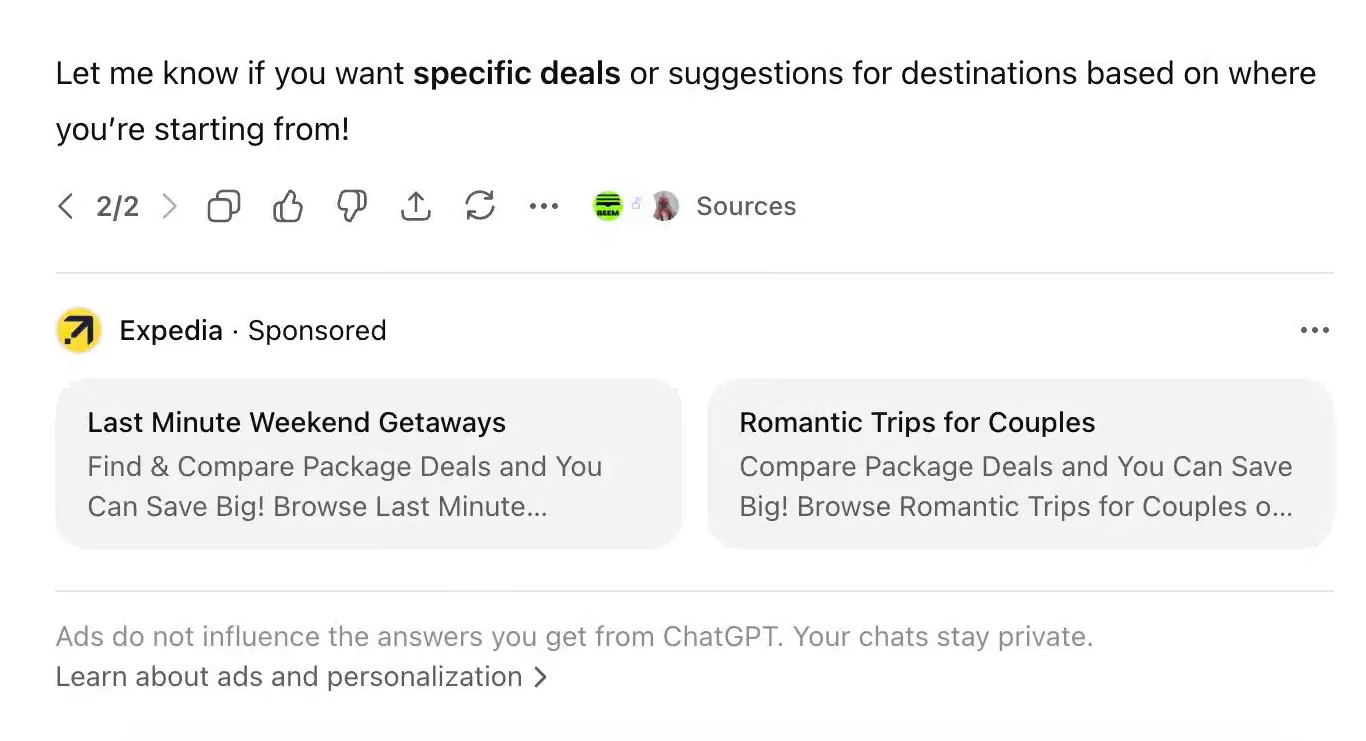
Of course, it is unclear whether early ad placements like this will be common; we suspect it’s part of the platform’s ongoing testing.
How does ChatGPT determine which ads to show?
ChatGPT ads are served based on relevance to the conversation. In other words, the content of the chat thread helps determine what ads appear.
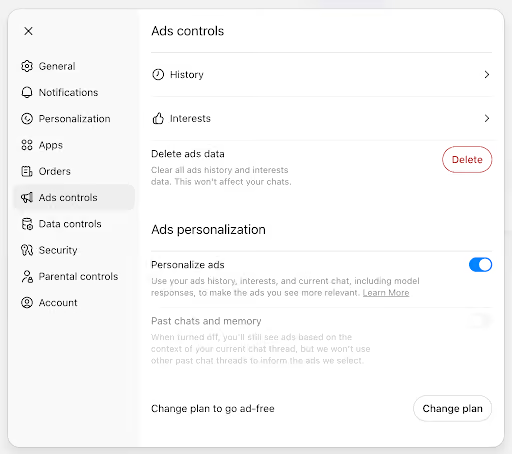
Users also have the ability to enable ad personalization in their settings.
What makes ChatGPT a different kind of ad placement
ChatGPT is by far the most widely used AI platform on the market. As of late 2025, the market intelligence firm Sensor Tower estimates roughly 810 million global monthly active users, with paid subscribers making up a relatively small share. As OpenAI expands its ad testing, this means most users will likely encounter ads.
While people still use Google to gather information and make decisions, ChatGPT ads represent a shift in how buyers discover solutions. It does not replace traditional social or search ads, but this avenue of reaching buyers comes with distinct advantages.
ChatGPT ads vs. social ads
On platforms like Instagram or TikTok, ads generally compete with content created for entertainment—think memes, dance challenges, transformation journeys, and so on. That environment generally rewards fast pattern interrupts and broad appeal.
In ChatGPT, however, users tend to be in problem-solving mode, looking for answers rather than spectacle. Rather than scrolling through their feed, they type nuanced prompts about what exactly they want. In this context, detailed information means more than vague statements. From an advertising perspective, this creates an opportunity to reach high-intent buyers who may be further along in their decision-making process.
ChatGPT ads vs. Google Search ads
ChatGPT ads have more in common with search ads than social, since both show up when users are actively looking for answers. The difference is how much context the user provides. Google queries can be highly specific (including long-tail keywords), but they’re often still shorthand. Meanwhile, ChatGPT prompts tend to be more thorough, with more detail and nuance contained in a single message.
Here’s an idea of how queries on the two platforms differ:
- Google: best hr software for managing freelancers
- ChatGPT: I’m COO of a 30-person company that works with dozens of contractors. We’re looking for an HR software tool that can handle onboarding, payroll, and time tracking. Our budget is ideally no more than $300/month. What platforms fit this criteria?
ChatGPT also tracks ongoing context, so ads can reflect prior inputs or additional requests. In theory, this means ad placements that align with a more fully described problem over time (where OpenAI’s policies and product experience allow).
Finally, there’s attention. Google’s search results pages place ads alongside many competing links and modules. ChatGPT, on the other hand, is a single-thread interface, so when an ad is relevant to what the user just asked, it may be more noticeable—especially because it appears directly beneath the answer.
Who are ChatGPT Ads best suited to?
One interesting observation from OpenAI’s early ad pilot is the range of brands that have publicly said they’re participating. These include Adobe, Audible, Criteo, HelloFresh, Target, and Williams Sonoma, among others.
While we anticipate ChatGPT ads present growth potential for all verticals, we believe it may be especially impactful for:
- B2B SaaS and enterprise software
- Professional services
- Higher-consideration ecommerce categories
Essentially, ChatGPT ads likely make the most sense for products where the customer’s path to purchase involves asking detailed questions, comparing options, and refining requirements—exactly the kinds of behaviors ChatGPT is increasingly used for. OpenAI’s own research on consumer usage shows that more than a fifth of users (21.3%) use the platform to find information, reinforcing why research-heavy categories may see the earliest value.
The Bottom Line
ChatGPT ads are early and still evolving, but their development makes the platform an even more direct path to conversion. The best-performing ads here likely won’t be the loudest or flashiest. They’ll be the ones that fit naturally with what the user is already trying to do, and send them to a post-click experience that continues the same thread of intent.
At Primer, we’re excited for ChatGPT ads as a new avenue for reaching users, especially given that this ad format exists in a high-intent context where users are actively looking for answers. If your business is interested in exploring ChatGPT ads, we can help. Get in touch for a growth consult.
.avif)
.avif)
.avif)
.avif)
.avif)
.avif)
.avif)


%2C%20Color%3DNegative.svg)
.svg)