
In this article
Meta’s Andromeda update has been around for a while, but it wasn’t until recently that marketers began to feel its full impact.
The rules of the game have now changed: traditional micro-variation testing like the small tweaks, the endless iterations, the “test every angle” approach, simply can’t keep up in an ecosystem where the algorithm learns faster than humans can optimize. Andromeda is accelerating this shift, reshaping how creative assets are ranked, distributed, and scaled across Meta’s ad surfaces.
We’re facing a world of creative diversification, this means that marketers must set up their game with concept-level testing that drives genuine, measurable growth; instead of volume-testing with small changes.
In this post, we break down what’s changing, why testing at the concept level matters, and how you can implement a three-stage testing framework to build performance creative that converts.
How the Meta Andromeda Update Reshapes Creative Optimization
Meta Andromeda is a major shift in how creative assets are assessed.
As the platform gets smarter at detecting subtle patterns across massive audiences, the days of relying on simple tweaks like single-word changes or color adjustments are over. Advertisers must take a broader look at performance creative strategy.
The Meta Andromeda Algorithm has supercharged the platform’s ability to analyze creative elements holistically. It evaluates imagery, audio, copy, and context, all in real time, meaning that small tweaks can be drowned out by rapid algorithmic optimization. This leads to unstable signals when testing micro-variants. With automated tools like Advantage+ and dynamic creative assembly, Meta’s system reallocates impressions quickly, often starving low-variance tests before they can yield meaningful data.
Okay, we know it may sound too technical, so what does this mean in practical terms? Basically, the algorithm now focuses on identifying strong, signal-rich creative patterns rather than minute cosmetic changes.
In a real-world scenario, tiny changes, like swapping a CTA or tweaking a thumbnail, barely register anymore. Meta’s system is now looking for big creative signals, not small cosmetic ones. So instead of obsessing over micro-optimizations, marketers need to test different concepts, different narratives, and different hooks that the algorithm can actually learn from. (PS… we have a list of 101 hooks you can start using right now).
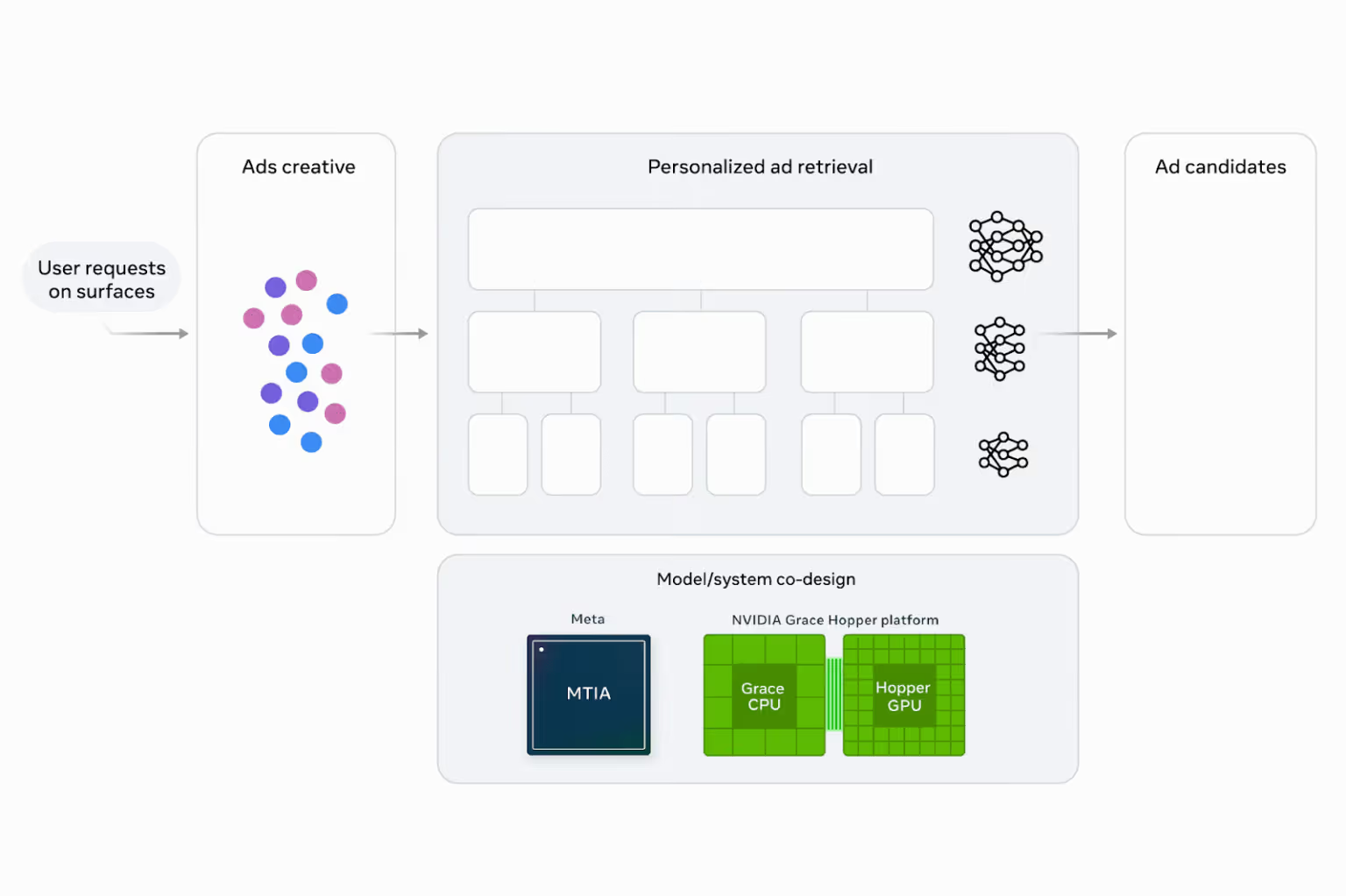
Beyond creative testing, measurement has become more challenging. With privacy changes such as heavier reliance on server-side events and Conversion API, detecting small performance lifts is even more difficult.
In practice, this means marketers must stop relying on short-term metrics like CTR or CPM. Those signals don’t tell the full story anymore.
Now, you should focus on metrics that reflect real, incremental ROI, like conversion rate, revenue lift, and customer LTV. Meta’s automation makes this shift necessary. The platform now rewards creative strategies built on solid data and long-term growth, not quick wins.
As growth partners operating at the intersection of creativity and data-driven insights, we now have an opportunity to refine our testing strategies. Don’t chase the noise of minor tweaks, focus on designing experiments with clear, measurable outcomes that align with your long-term business objectives. By doing so, you not only support Meta’s evolving platform mechanics but also ensure that every creative iteration contributes meaningfully to your bottom line.
The Power of Concept-Level Testing: A Strategy Framework
In a landscape dominated by Meta Andromeda’s fast-paced optimization, the secret to sustainable grow this concept-level testing.
Concept testing means evaluating entire creative packages as a unit: distinct visual narratives, hooks, or value propositions that speak to the core of what you offer. This method prevents the noise generated by trivial modifications and ensures the delivery engine has clear signals to amplify.
Because broader creative hypotheses give Meta the strong signals it needs to find real engagement across large audiences.
Instead of running dozens of tiny variations, you focus on 4 – 8 distinct creative bundles that each tell a different story.
For example, imagine a jewelry brand. Instead of testing small tweaks of the same image, you could compare a testimonial, a trend or even a simple grid of images. Yes, the main picture is still the same, but the concept around changes. And that’s what really helps you to determine a winner.
Here’s an example:

Here is what doesn’t work anymore: same image, same copy, the only change is the design layout. Meta’s Andromeda now scans the whole image, and even if the copy is distributed different (like here at Swim, sweat and sparkle), they are the same words after all. Changes and updates need to be more aggressive.
This approach simplifies creative decisions and aligns with how Meta now measures performance, favoring clear, differentiated concepts over minor edits.
A robust concept testing strategy starts with a clear three-stage funnel. The first stage is concept discovery, which is designed to quickly identify high-performing creative ideas using broad prospecting audiences. By ensuring that each creative bundle receives an equal budget and stable impressions–either via manual controls or dedicated platform experiment tools–you mitigate the risk of automated budget reallocation skewing early results.
Once you’ve identified the top concepts, it’s time to move into scaled validation. Here, you run classic randomized A/B tests or holdout experiments (like geo holdouts or Meta Lift tests) to drill down into performance on key business outcomes such as incremental conversions and revenue lift. This stage is critical because it shifts the focus from short-term metrics to incremental ROI. For instance, a winning concept in discovery might look great on initial engagement metrics, but validation will reveal whether it truly lifts long-term revenue and customer retention.
The final element of this strategy is incorporating human-in-the-loop creative diagnostics alongside data-derived insights. Structured evaluations based on hook strength, visual hierarchy, offer clarity, and storytelling help ensure that creative assets are not only performing in terms of raw data but are also resonating on a human level. You might pair quantitative metrics with qualitative reviews from seasoned creative directors to refine the messaging and visual tone.

Now, this is what Meta is expecting us to do. Same product (necklace) but different approach. The first one is a testimonial with a UGC video and the second one is a static image with the simple, native caption “Say hi to your new favorites”.
Concept-level testing embodies our brand promise: growth built on systems, not luck. By trusting in a structured, data-informed process, you can iterate rapidly and scale what works, and drive performance with creative that performs, not just looks good. This approach allows you to move quickly, learn constantly, and adapt strategically, delivering transparent and measurable results every step of the way.
Implementing a Three-Stage Testing Framework for Sustainable Growth
To get real results with concept-level testing under Meta Andromeda, marketers need a clear three-stage framework. This system improves experiment accuracy and creates a repeatable path to scale winning creative.
Stage 1: Concept Discovery
In the discovery phase, the goal is to identify high-level creative concepts that resonate with broad audiences.
A concept isn’t a minor alteration: it’s an entirely different way to communicate your value. Each concept should have a different narrative that speaks to a specific need or aspiration. With strong, differentiated ideas, you’re more likely to uncover the creative law of big wins.
Start by developing 4 – 8 distinct creative bundles. Each bundle should offer a coherent narrative, combining visuals, primary hooks, and clear CTAs that express a unique value proposition.
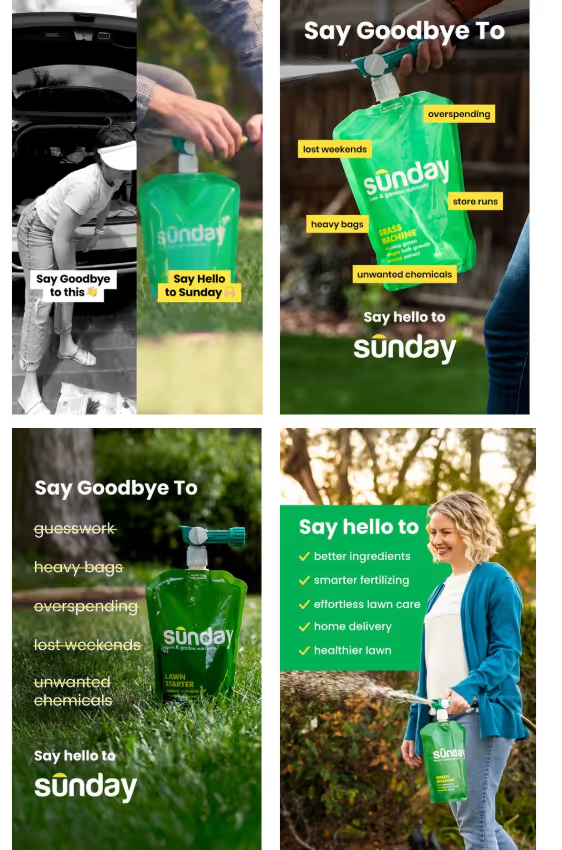
Deploy these creative bundles to broad prospecting audiences to get fast learnings. It’s essential during this stage to keep equal-budget allocation among the test arms. Use experimental tools provided by Meta (such as the Ads Manager Experiments tool) to enforce even distribution. The key metric here is not just click-through rates but practically relevant KPIs such as CPA, conversion rate, and early engagement signals. Run the experiment until you hit a predetermined sample size or a set duration (typically 7 – 21 days) to mitigate transient biases and noise.
Stage 2: Scaled Validation & Optimization
After you’ve identified the top creative concepts, it’s time to move into rigorous A/B testing. This phase focuses on validating that the winning concept delivers significant incremental value over the baseline.
You can run classic randomized A/B tests or use controlled holdouts, such as geo experiments or Meta Lift tests, depending on your setup.
It’s very important to set clear, pre-registered decision parameters: define what constitutes a “win” based on incremental conversions, incremental revenue, and long-term LTV.
For example, you might set a rule that a winning concept must beat your baseline by 15–25% in CPA or ROAS. Validate the results using metrics that matter, not short-term CTR or engagement. Focus on conversion metrics that tie directly to your business goals. Use strong testing methods, and make sure your sample sizes and test duration are large enough. This helps you avoid early optimization bias created by AI-driven delivery.
Stage 3: Incrementality & Long-Term Measurement
The final testing phase is about proving that your creative not only generates upfront conversions but also contributes to long-term business growth. The incrementality phase uses longer tests to track cohort behavior, retention, repeat purchases, and total revenue impact. These tests usually run for 30 – 180 days.
As we highlighted earlier, this stage depends on strong, controlled experiments to prove real incremental lift. Reinforcing that point here matters, because incrementality is what separates a “good-looking” result from a result that actually drives revenue.
Use randomized holdouts or lift tests to verify that your creative is outperforming your baseline in a meaningful way. And track outcome metrics like incremental conversions, ROAS, and customer LTV. These metrics confirm that your winning concepts deliver sustained growth, not just short-lived performance bumps.
Throughout this process, marrying quantitative data with qualitative diagnostics is crucial. Use creative diagnostics tools to assess factors like hook effectiveness, visual hierarchy, and offer clarity. Tools such as structured creative evaluation frameworks aid in iterating the creative further, fine-tuning what works and discarding what doesn’t, so that every campaign is built on verified performance insights.
Embracing this three-stage framework means you’re no longer guessing which creative elements might work. Instead, you’re operating a system built on data, testing, and rapid iteration, ensuring that every campaign you launch is optimized for both immediate impact and long-term growth. This is the essence of executing creative testing that scales: smart, fast, and always grounded in measurable results.
Key Takeaways from the Meta Andromeda Update
- Meta Andromeda has shifted performance creative optimization from micro-tweaks to concept-level signals, making broad creative testing essential.
- Concept testing focuses on distinct creative narratives, enabling marketers to overcome noise and measurement challenges inherent in automated optimization.
- A structured three-stage testing funnel—discovery, scaled validation, and incrementality—ensures creative assets are robustly evaluated and aligned to long-term business outcomes.
- Experimental design and human-in-the-loop creative diagnostics are vital to ensure that results are both statistically sound and resonate with target audiences.
- Emphasizing incremental ROI over short-term platform metrics leads to more sustainable, growth-focused creative strategies.
What the Meta Andromeda Update Means for the Future of Creative Testing
Throughout this guide, we’ve shown how concept testing helps you cut through the noise of automated optimization and uncover what truly resonates. A structured three-stage testing funnel: discovery, scaled validation, and incrementality, making sure every concept is evaluated with both short-term clarity and long-term impact in mind.
Meta Andromeda is raising the bar, but that’s the opportunity. Build systems, not guesswork. Test bold ideas. Measure what matters. And let smart, sustainable, creative strategy drive your next stage of growth.
Think like an analyst. Create like an artist. Scale like a strategist.
.avif)
.avif)
.avif)
.avif)
.avif)
.avif)
.avif)


%2C%20Color%3DNegative.svg)
.svg)