In this article
With 3 billion users worldwide, Instagram remains a powerhouse for both creators and businesses. If you're looking to scale on the social media platform with paid ads, Instagram’s latest updates and algorithm shifts bring new opportunities to grow—that is, if you know how to leverage them.
Below, we’ll go over:
- Meta's new Adaptive Ranking Model
- The attribution changes that might be impacting your performance metrics
- What's new with Reels
- A caption link feature in testing
Looking for help with your Instagram ads? Primer can help your brand grow faster through conversion-optimized ad creative and data-driven strategy. Reach out to learn more about working together.
What’s new on Instagram in 2026
In 2026, Instagram continues to innovate, introducing features and updates that enhance user experience and engagement.
Meta’s Adaptive Ranking model: A better ad engine
The biggest infrastructure change to hit Instagram advertising launched in late 2025: Meta's Adaptive Ranking Model, a complete rebuild of how its ad recommendation system works.
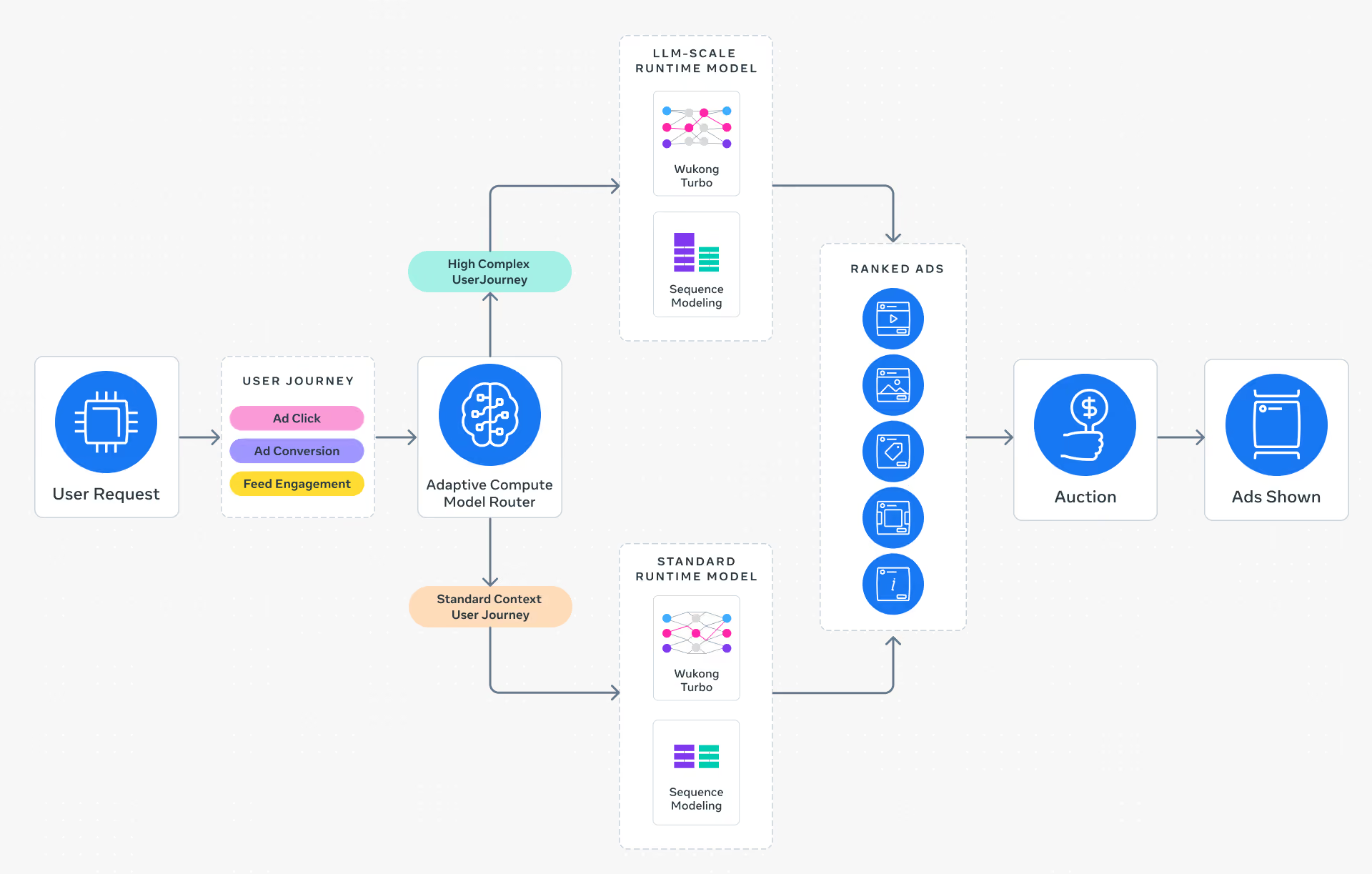
Previously, every individual ad request was processed through the same model regardless of context—an approach Meta describes as “one-size-fits-all” inference. The new Adaptive Ranking Model replaces this traditional model with “request-oriented optimization,” which dynamically matches each request to the most effective and efficient model based on a deeper understanding of the user’s context and intent.
The result is a highly personalized ad experience for Instagram users and greater advertiser value. According to Meta, the Adaptive Ranking Model has increased ad conversions by 3% and CTR for target users by 5% since its debut.
What this means for advertisers:
More targeted content will get better results.
Instagram is now better at identifying the people most likely to convert, which means audience quality matters more than audience size. Broad creative aimed at everyone will underperform against more specific, audience-tailored ads.
Creative quality compounds.
Because the new model surfaces ads based on engagement signals and intent alignment, ads that generate genuine interaction will get better placement over time. The bar on creative is even higher than before.
Some efficiency gains may be passive.
Advertisers running well-targeted campaigns may see ROAS improvements without changing anything, as the infrastructure is doing more work on your behalf. But that doesn't mean you should stop optimizing.
Meta's attribution changes: Why your metrics look different
If your click-through conversions dropped this year without a corresponding drop in actual sales, you're not imagining things. But rest assured, it's not a performance problem. In March, Meta rolled out a big change to how it defines and counts ad attribution.
What this means for advertisers:
Click-through attribution now means link clicks only.
In the past, any ad interaction—such as a like, share, or save—could count as a click for attribution purposes if the user later converted within the window. Now, only link clicks will count as click-throughs for website and in-store conversions.
Other interactions move to "engage-through attribution."
Previously known as engaged-view attribution, this new approach to attribution describes conversions from non-link click actions (e.g., likes, comments, saves, and shares) as “engage-through attribution.” For video ads, engaged views are now defined as 5 seconds (down from the previous 10 seconds). It’s important to note that this category has a 1-day attribution window.
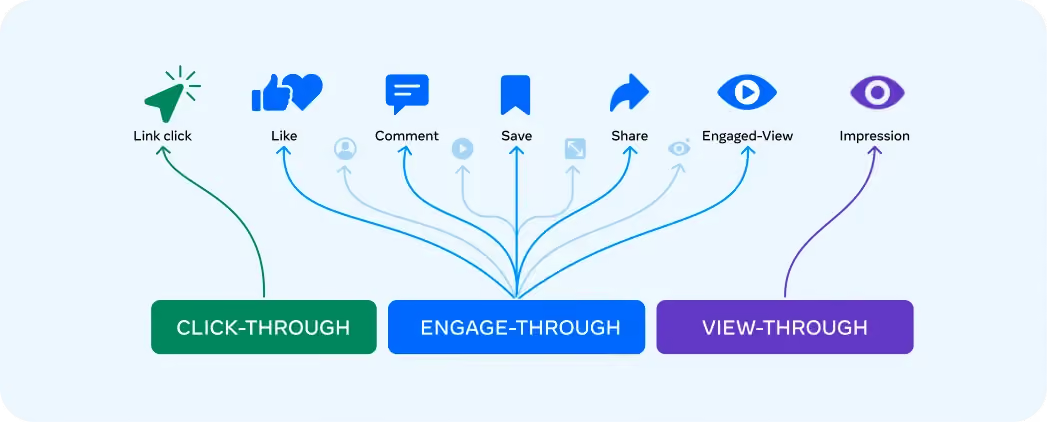
Because of these changes, you might be seeing lower click-through conversions since some conversions now fall under the “engage-through” umbrella, and some may have occurred more than one day after a non-link interaction. Adjust accordingly by setting a new performance baseline and enabling engage-through attribution in your reporting view to capture the full picture.
Reels in 2026: More ad spend, smarter targeting
Reels' dominance in Instagram advertising continues: In 2025, over 50% of Instagram ads ran in Reels, up from 35% in 2024. In the U.S. alone, Reels accounted for 46% of time spent on the app last year.
Two recent updates make this an even more important channel to get right.
Trending Ads
At the Interactive Advertising Bureau (IAB)’s NewFronts in March 2026, Meta announced an expansion of Reels Trending Ads—a format that places your ads alongside culturally relevant, trending content—with new category lineups that will be built around events such as Fashion Week, NFL games, Black Friday, and F1 races. There is also a new buying option, which is currently in a limited trial period, that allows advertisers to get high-visibility placements for up to 24 hours around these events.
“Your Algorithm” controls
After testing the feature in 2025, Instagram rolled out "Your Algorithm" controls to all English-speaking users globally in January 2026. Users can now manually choose which topics appear in their Reels feed and specify three top interests.
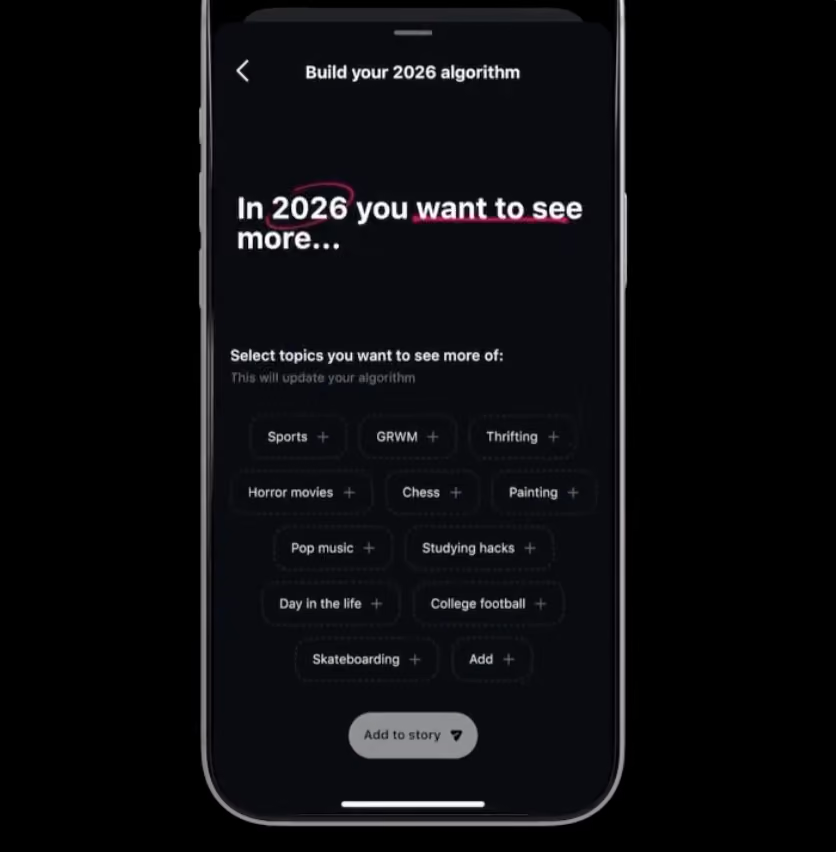
For advertisers, this means intent signals are becoming more deliberate and self-selected. Users who have curated their feed around specific topics are telling the algorithm exactly what they care about, making interest-based and contextual targeting sharper. The more niche and specific your creative, the more likely it is to land in front of someone who has actively opted into that content category.
Clickable caption links: A new feature to come?
Instagram is currently testing clickable links in post captions for a small group of Meta Verified subscribers. There’s nothing to do about it yet, but if this feature rolls out broadly, it’ll change how brands approach driving traffic from organic posts.
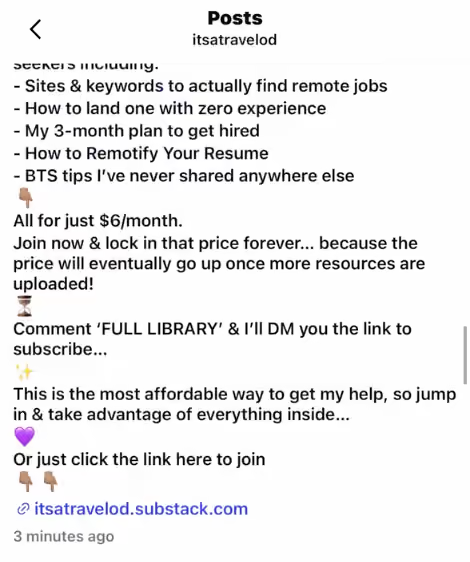
We’ll be keeping tabs on this update, as it could mean not having to use the “link in bio” workaround anymore—and instead, a direct link-to-site conversion from organic content.
Make Instagram work for you in 2026
Instagram's biggest updates this year are changes to the underlying systems that determine who sees your ads, how those interactions get measured, and how much your creative quality actually matters. The brands that will benefit most are the ones that have solid data-tracking infrastructure in place and know how to adjust their creative strategy accordingly.
If you're running paid campaigns on Instagram and want help adapting to its ever-changing platform, Primer’s team of Instagram Ads experts is ready to support you. Reach out to book a growth consultation.
.avif)
.avif)
.avif)
.avif)
.avif)
.avif)
.avif)


%2C%20Color%3DNegative.svg)
.svg)