
In this article
Global ad spend is on track to exceed $1 trillion for the first time in 2026. But as any marketer has experienced firsthand, devoting more of your budget to paid media doesn’t automatically translate to better results. In fact, over 60% of digital media spend is estimated to be wasted because of factors like low viewability and ineffective targeting.
The brands that get the most out of their ads aren’t necessarily spending more than their competitors; they’re spending in the right places.
Though it can be tempting to simply choose the ad platforms that seem to be the most popular within your industry, the best option is the channel(s) where your customers actually hang out. In this guide, we walk through the differences between the major ad platforms—Google, Facebook, Instagram, TikTok, YouTube, and LinkedIn—and explain how to choose the right one for your business.
Start by asking the right questions
Before evaluating any ad platform, you must first be clear on your business and your customer. Consider:
- Are people already searching for what you sell, or do you need to create demand?
- How complex or high-consideration is your product? Is it an impulse buy or a major purchase that requires research?
- Who is your customer? Are you selling B2C or B2B? To individuals, SMBs, or enterprise teams?
- Where do they spend their time?
- Can your value be communicated quickly through creative? Or does your product need more context, education, or demonstration to convert?
- Do you have the creative assets to meet the platform's bar? Strong video, user-generated content (UGC), or visuals? Or are you working primarily with static images and copy?
- What's your budget reality? Are you testing with limited spend, or do you have room to scale and iterate across multiple channels?
- Where is this customer in their journey? Are you focused on acquisition, retargeting, or reactivation?
Your answers to these questions will help meaningfully narrow down your options and prioritize where to begin. That said, you may naturally find that your customers frequent more than one platform.
According to research from Boston Consulting Group, people discover and engage with brands through four behaviors: streaming, scrolling, searching, and shopping. They also move fluidly between them—meaning a single platform rarely captures the full picture of how your customer moves toward a purchase. Although the modern consumer journey doesn’t move in a straight line, your goal is to identify the best starting point for your paid media strategy and which channels to layer in as you scale.
A breakdown of the major ad platforms
Understanding the differences between ad platforms is key to developing a paid media strategy that actually reaches your target customer while accommodating what your team can realistically execute.
Google Search Ads
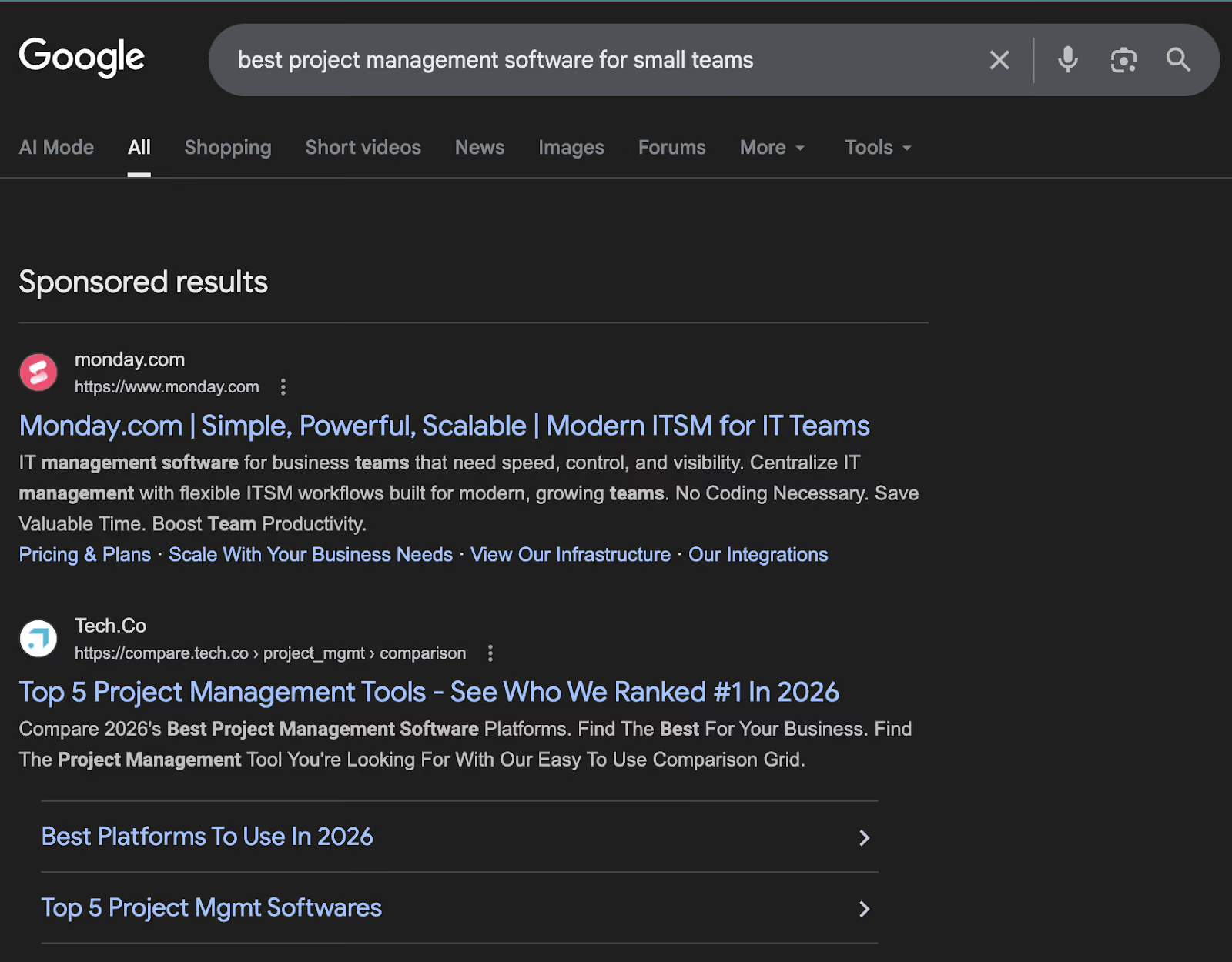
Google Search ads are the strongest option when purchase intent already exists—such as when potential customers are typing queries like “same day flower delivery near me” or “best project management software for small teams.” This platform excels more at capturing demand than creating it, so it works particularly well as an acquisition channel for high-intent buyers.
- Best for: B2B SaaS, local services, urgent needs, searches to compare or find alternatives
- Creative bar: Lower than social since ads are text-based. Communicating the value of your offer through clear, compelling copy is the priority.
- Budget reality: CPCs vary widely by industry, ranging from $1.60 for arts and entertainment to $8.58 for attorneys and legal services. Using this platform can be expensive for industries that tend to have highly competitive keywords.
As an example, Walks of Italy, a tour company based in Rome, opted to use Google Search Ads as its primary acquisition channel, recognizing that tourists generally research options extensively before booking.
Through the platform, the business saw how generic searches, such as “Rome tour,” contributed to final bookings alongside branded queries. This enabled Walks of Italy to optimize its full search path and adopt an automated bidding strategy for high-volume generic keywords, leading to a significant boost in sales and revenue over the summer season.
Facebook Ads

The depth of demographic and behavioral data on Facebook Ads makes it a versatile platform for marketing across the full funnel and a common starting point for brands diving into paid media for the first time.
This advertising option particularly shines in situations where you can communicate value quickly, such as when you sell a consumer product that appeals to a wide audience or have a clear offer you can use to generate leads. Additionally, the platform’s relatively accessible entry costs allow for high-volume creative testing.
- Best for: DTC/ecommerce, lead generation, local services
- Creative bar: Medium-high, as video and UGC formats increasingly outperform static ads. Your hook needs to land in the first few seconds.
- Budget reality: The average CPC across all industries in 2025 was $1.72. There are low minimum spend requirements, and you can choose between daily or lifetime budgets.
When Primer partnered with Farmstead, an online grocer, to ramp up new customer acquisition via Facebook marketing, we took a full-funnel approach: longer brand videos for prospecting and a shorter version for retargeting custom audiences built around video views.

Compared to the previous year, our efforts led to a 39% higher conversion rate and lower costs for new customer acquisition, demonstrating how strong Facebook creative can drive results across the entire funnel.
Instagram Ads
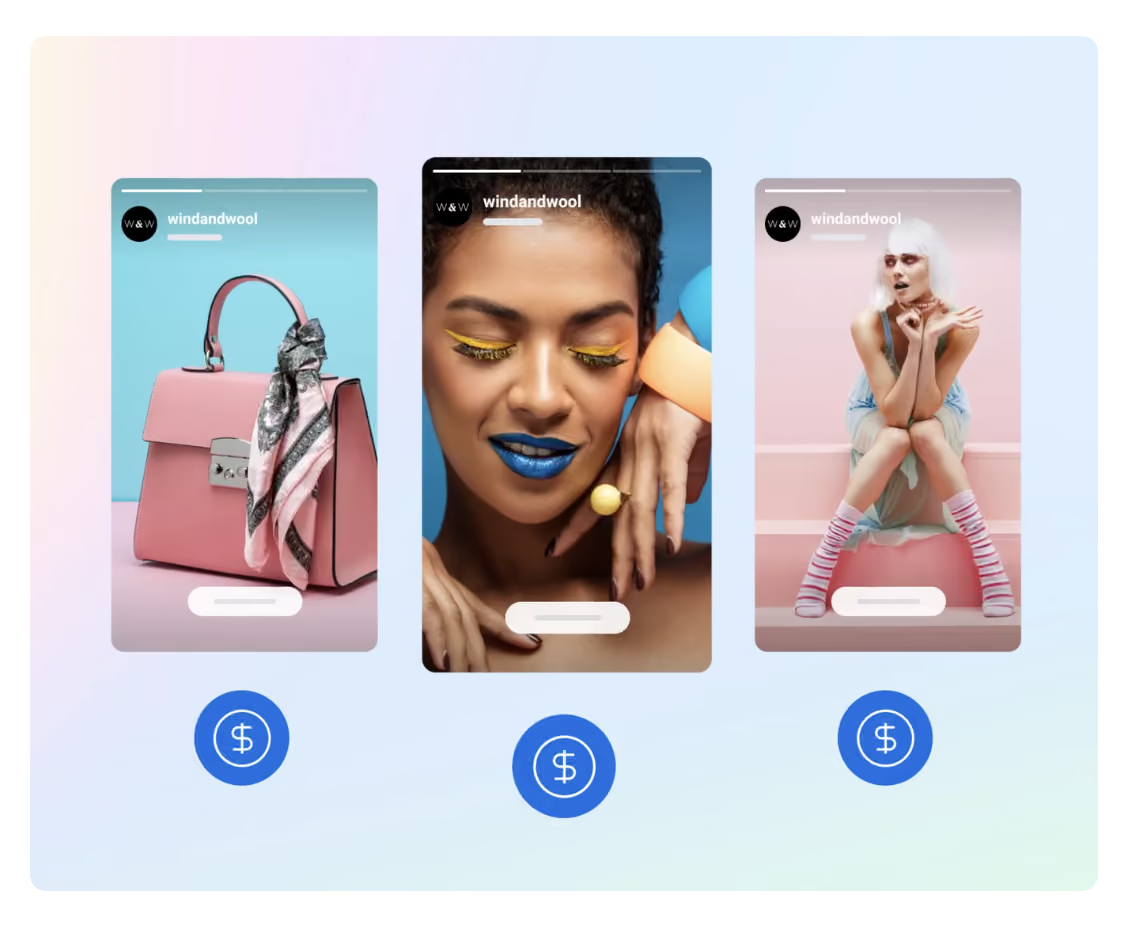
Instagram rewards pleasing visuals and lifestyle context, making it a natural complement to Facebook ads, but also a strong channel on its own for consumer brands with aesthetic products. Instagram Ads shares Meta's ad infrastructure, so campaigns can be managed alongside Facebook, but the creative requirements and audience behavior are notably different.
For acquisition, Instagram's discovery dynamic is a real asset: 83% of users actively search for new brands and products on the platform. For retargeting, its carousel and Stories formats work well for re-engaging users who've already shown interest.
- Best for: Consumer brands, visually-led products, influencer-adjacent offers
- Creative bar: High. UGC and Reels-style video consistently outperform polished brand creative. Content needs to feel native to the feed.
- Budget reality: According to eMarketer, Instagram carries the highest CPM ($10.48) among major social platforms, including Facebook and TikTok.
To build awareness for its new squeezable, non-drip bottle, Nutrioli, a Mexican cooking oil brand, ran photo and video ads across Instagram Feed, Stories, Reels, and Explore.
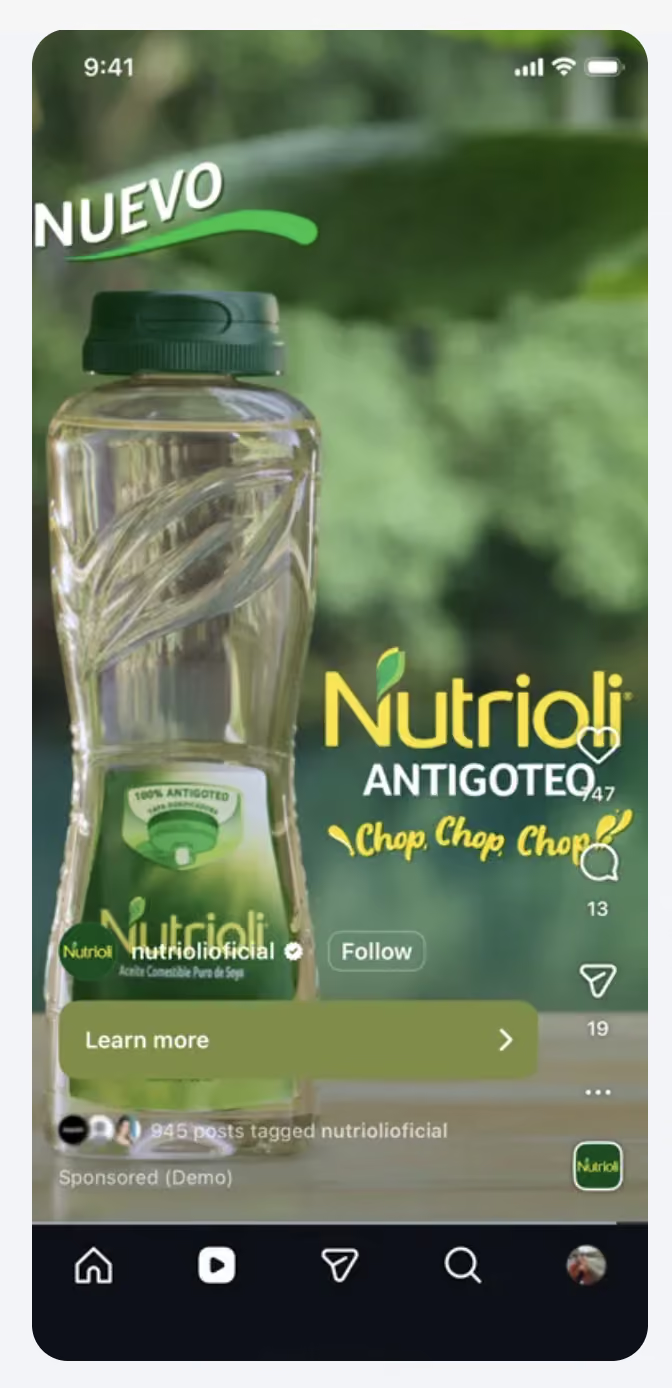
The business also amplified its campaigns through repeated exposure and frequency tactics. This strategy boosted standard ad recall and brand awareness, demonstrating how variety in creative and smart audience targeting can deliver excellent results on Instagram.
TikTok Ads
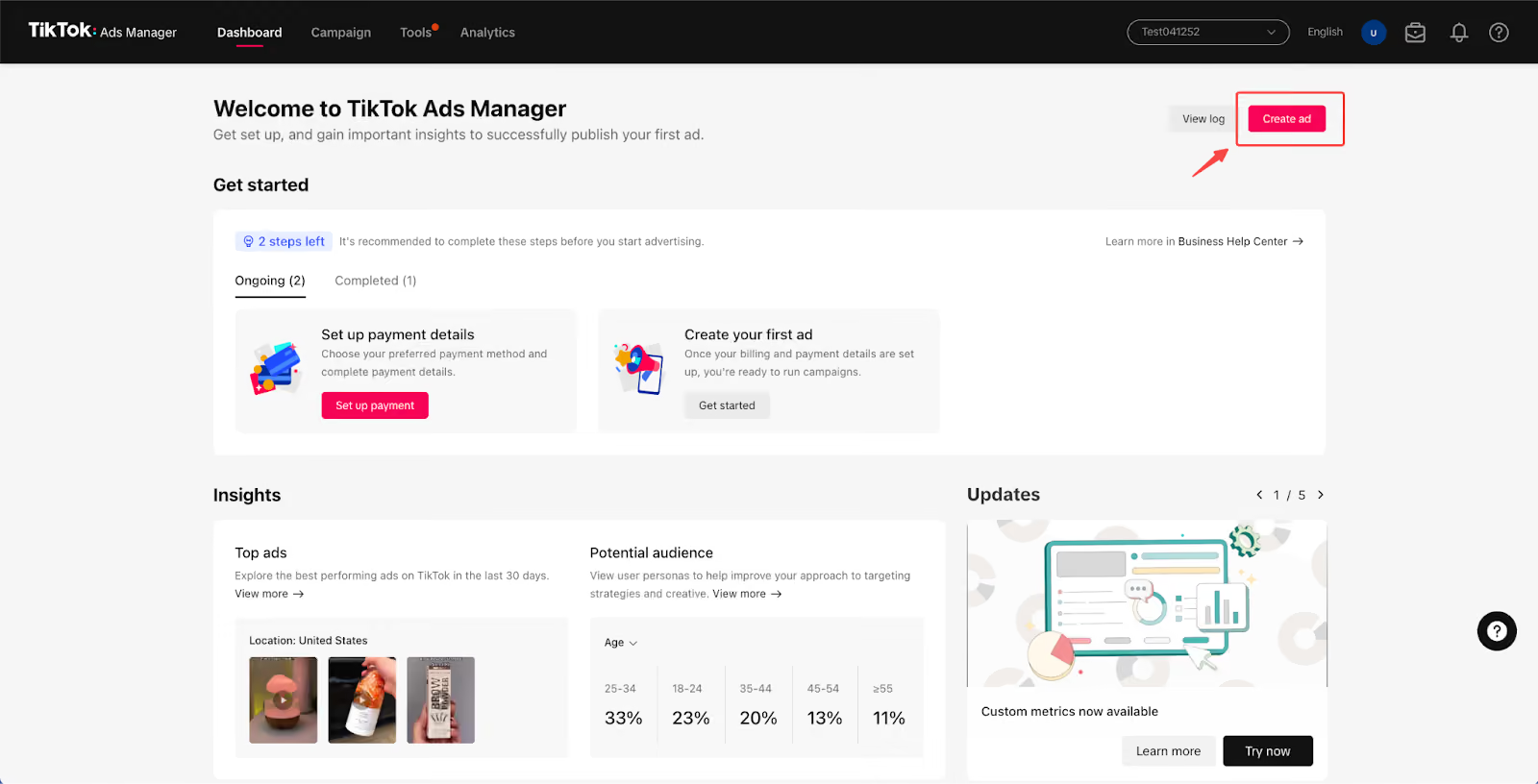
TikTok Ads shines as an outlet for genuine product discovery. Unlike other platforms, its model favors content based on user interests and behaviors over follower relationships, making it easy to quickly reach a new audience and trigger unplanned purchases. In fact, 82% of TikTok users have discovered an SMB on the platform before hearing about it elsewhere, and 67% have been inspired to shop for something they saw on TikTok, even when they weren’t actively looking to buy anything.
- Best for: Consumer brands, impulse-friendly, visually appealing offerings, products that creators and influencers can readily demonstrate in action or show to pique curiosity
- Creative bar: High, but in a specific way. Ads need to feel trend-aware and native to the feed.
- Budget reality: Average CPC of $0.25-$4 and average CPM of $3.20-$10, with a minimum spend per campaign of $500. The “freshness” of creative tends to expire more quickly here than on other platforms, so budget for frequent updates.
TikTok Ads requires creative specifically tailored to its platform, as seen through the campaign we developed for Rocksbox, a jewelry rental membership. Because the brand’s existing UGC ads for other platforms weren’t performing as strongly on TikTok, we decided to rebuild the creative strategy around more TikTok-specific formats and styles. This included elements like fast-paced editing, trending audio, voiceovers, and a DIY feel.

The result: Rocksbox saw a big jump in sales, growing its total purchases by over 1,000%.
YouTube Ads
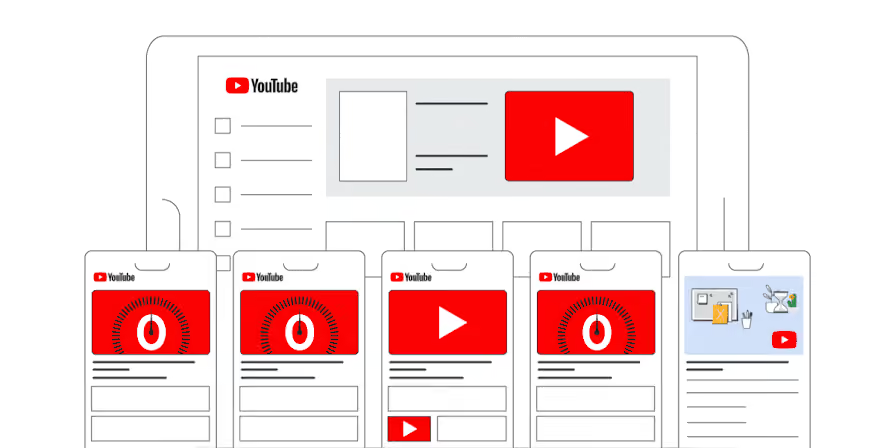
If your offering needs education, demonstration, or storytelling to convert, or if you're playing a longer game on brand consideration, it’s worth investing in YouTube Ads.
The platform can serve multiple roles across the funnel—from non-skippable and skippable pre-roll ads for top-of-funnel awareness to retargeting campaigns for familiar users. However, given the expectation of high-quality video for this channel, it’s best suited to brands with proven creative and room to iterate.
- Best for: High-LTV products, complex offers, brands in crowded categories that need to build preference early
- Creative bar: High, as quality video is the norm on the platform
- Budget reality: An estimated cost-per-view of $0.03 to $0.30; higher production costs plus media spend make this less accessible for early-stage testing.
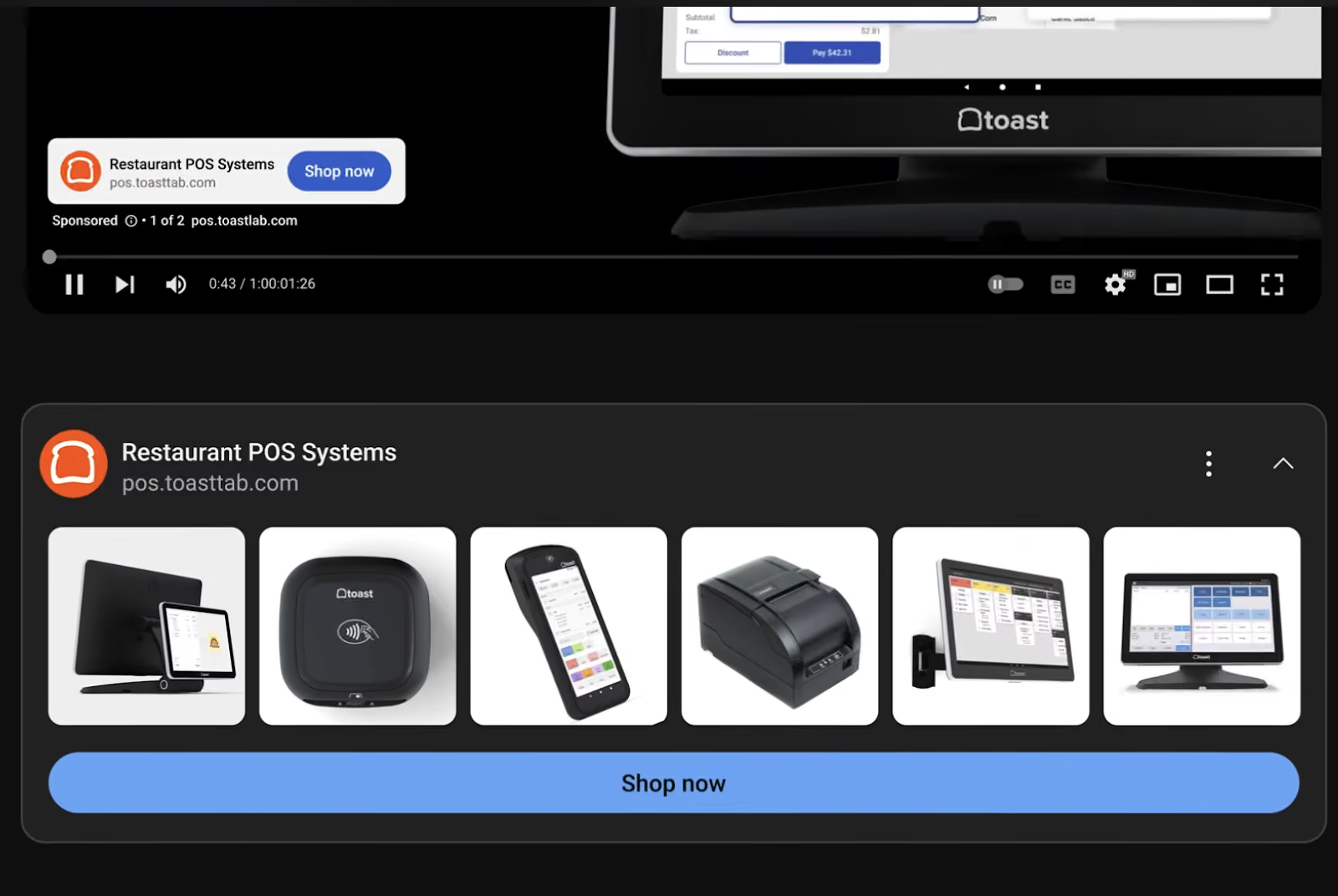
In the case of Toast, a restaurant point-of-sale management system, AI-powered YouTube ads were used to reach restaurant owners before they were actually shopping for a new system. The company’s strategy involved pairing awareness-building, narrative-driven video with Search ads for high-intent moments. Toast’s success in growing its brand visibility and customers demonstrates how this platform can be a powerful B2B tool that influences customer preferences early and accelerates decision-making.
LinkedIn Ads
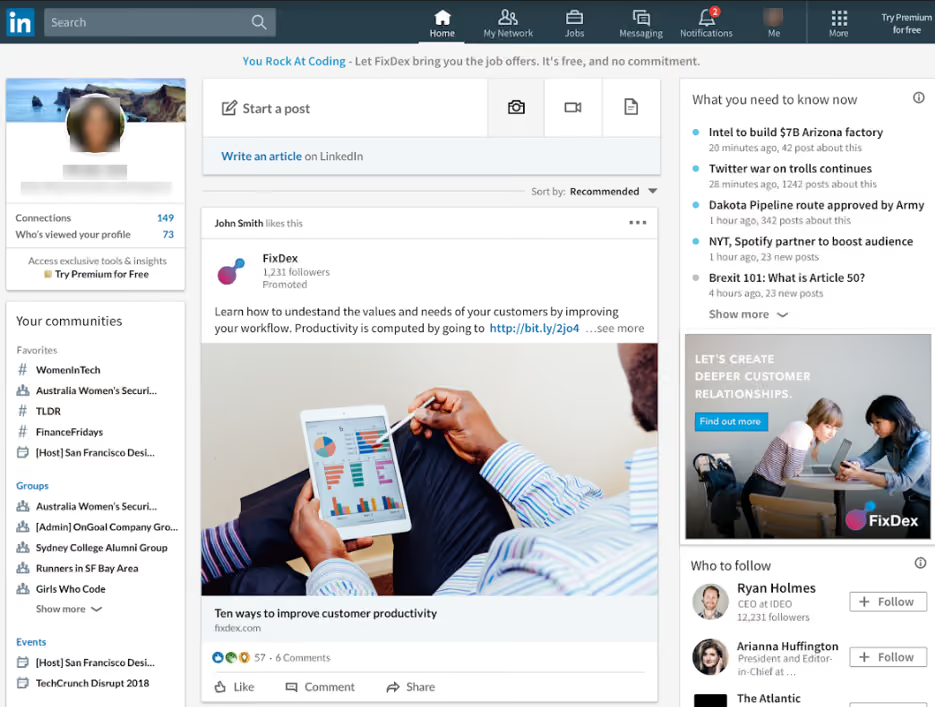
LinkedIn Ads, the only major platform built for professional targeting at scale, works well as a full-funnel platform instead of just an acquisition channel. Boasting more than 130 million decision-makers globally in its membership, it’s often ideal for B2B paid media strategies. The platform’s significance is growing as purchasing behavior shifts—with 67% of B2B buyers now preferring a rep-free experience and opting to do their own research.
- Best for: B2B SaaS, professional services, recruiting, account-based marketing
- Creative bar: Medium. Thought leadership, clear value propositions, and document ads tend to outperform flashy creative, though video is gaining traction, with viewership up more than 30% year-over-year.
- Budget reality: With a higher average CPM and CPC compared to other channels, LinkedIn can be harder to justify on a small budget. However, its return on ad spend has grown to 121%, outpacing Google Search and Meta for B2B.
7Speaking, an online language-learning platform in France, turned to LinkedIn Ads after years of minimal digital marketing investment left it struggling to compete with newer competitors.

By targeting HR and training decision-makers at large enterprise companies through Sponsored Content and personalized Sponsored InMail, the brand was able to reach the exact professional audience most likely to invest in employee language training. This generated more than 800 marketing qualified leads and over 10,000 landing page views.
Where to go from here
Selecting the right ad platform for your business is crucial, given that even great creative fails if it’s in the wrong format or environment. But it’s also an iterative process that requires patience and discipline as you test, learn, and make adjustments.
Most brands eventually expand their paid media strategy to include additional channels as they scale. Ultimately, the companies that excel at paid growth are the ones that understand who their customers are and which ad channels they use to make their purchase decisions.
Whether you’re developing a paid media strategy for the first time or revisiting which ad platforms are best for your business, Primer’s team is here to support you. Schedule a call with us to learn more.
.avif)
.avif)
.avif)
.avif)
.avif)
.avif)
.avif)


%2C%20Color%3DNegative.svg)
.svg)